
The Surprising Benefits of Flexibility for Mobility, Balance, and Healthy Aging
- 4ever4nowliving
- 14 hours ago
- 5 min read
Most of us don’t think much about flexibility until our bodies start sending us subtle reminders.
At first, the changes are easy to miss. Bending over to tie your shoes feels a little tighter than it used to. Standing up after sitting at your desk for an hour takes a bit more effort. Reaching for a high shelf or turning your torso to check your blind spot while driving becomes just uncomfortable enough to notice.
Because these shifts happen so gradually, it is easy to assume they are just an inevitable part of getting older.
In reality, that creeping stiffness usually isn't an aging problem, it’s a mobility problem. Our bodies adapt to inactivity surprisingly fast. When we don't regularly move our muscles and joints through their full range of motion, they get used to a smaller world. They become tighter, less mobile, and less efficient during everyday movements.
When you look at it that way, the benefits of flexibility for healthy aging go way beyond just stretching or exercise performance. It's actually the foundation for your posture, balance, joint comfort, and long-term physical independence
The encouraging part? Your body is incredibly responsive. At almost any age, consistent, gentle movement can reverse that stiffness and make everyday life feel a whole lot easier again.
What Flexibility Really Means (and What It Doesn’t)
When people hear the word "flexibility," they often picture advanced yoga poses, gymnast splits, or intense stretching routines. That misconception keeps a lot of people from ever getting started.
True flexibility simply means your muscles, joints, and connective tissues can move through a healthy, natural range of motion without restriction or strain.
You don't need extreme mobility. You just need enough freedom of movement to live your daily life comfortably.
When specific muscles become chronically tight, your body naturally finds ways to compensate. Other muscles have to work twice as hard to pick up the slack, which puts extra stress on nearby joints. A tight hip, for example, rarely stays a hip problem, it frequently shows up later as lower back tightness or knee discomfort.
By maintaining good flexibility, you help your body distribute daily physical stress evenly, the way it was designed to.
Why Mobility Matters More with Age

As we get older, our muscles, tendons, and joints naturally undergo some changes. Muscles lose a bit of their natural elasticity and joints can lose lubrication. Long periods of sitting can speed up that loss of mobility.
Without regular movement, we can easily fall into a frustrating cycle: stiffness makes us want to move less, and moving less makes us stiffer.
The good news is that your mobility responds quickly to consistent, gentle input.
Dedicating just 10 to 15 minutes a day to a simple stretching or mobility routine signals your nervous system to let go of tension and helps restore comfort to your joints.
The Benefits of Flexibility for Healthy Aging
Flexibility is the hidden engine behind effortless daily movement. When your joints can move freely, everyday tasks take less physical effort and put much less wear and tear on your frame.
Think about how many routine movements rely entirely on a functional range of motion:
Getting in and out of low chairs or cars
Carrying groceries without straining your back
Reaching high shelves without pinching your shoulder
Walking with a smooth, fluid stride
Bending down to pick something up from the floor
Beyond making tasks physically easier, better mobility gives you something equally important: confidence. When movement feels safe and predictable, you are much more likely to stay active. And that consistency is the single best driver of long-term health and independence.
The Direct Link Between Flexibility and Balance

We don't always connect tight muscles with a slip or a stumble, but flexibility plays a massive role in keeping you steady on your feet.
Chronic tightness in your calves, ankles, or hips can subtly change your posture and how you walk. Over time, this can shorten your stride length and make it harder to make quick balance corrections if you trip or step on an uneven surface.
To see how this works in real life, consider how tightness in just one specific area can trigger a chain reaction that directly impacts your stability:
Tight Area | How It Affects Your Movement | Why It Matters for Balance |
Ankles & Calves | Limits how well your ankle bends as you step | Makes it easier to trip on uneven ground |
Hips & Glutes | Shortens your stride and keeps you from standing fully upright | Decreases your stability when stepping sideways |
Lower Back | Restricts fluid twisting and turning of your torso | Hinders your ability to shift weight quickly |
While flexibility training alone won't prevent falls, combining it with regular walking, strength, or mind-body practices like yoga or tai chi creates a great defense system against age-related instability.
Finding Relief for Everyday Aches and Pains
A surprising number of common aches and pains aren't structural injuries at all. They are just the body protesting because certain muscles are too tight.
The Lower Back Connection: Stiff hamstrings and tight hip flexors pull on your pelvis, creating a constant tug-of-war that strains the lower back.
The Rounded-Shoulder Tightness: Spending hours looking down at phones or computers tightens the chest muscles, which pulls the shoulders forward and forces the neck and upper back muscles to work overtime just to keep your head up.
By gently lengthening these tight areas, you ease that constant mechanical pull on your joints, which can bring a massive amount of relief. Movement also boosts localized blood flow, which brings fresh oxygen and nutrients to the tissues to help them recover after a long day.
Building a Simple, Frictionless Routine

Improving your flexibility doesn't require hours of grueling exercise. When it comes to mobility, consistency always beats intensity. In fact, stretching too aggressively can trigger your body's protective reflexes, causing the muscle to tighten up even more to protect itself.
Instead, the goal is controlled, comfortable movement. The easiest way to stick with it is to remove the friction from your routine:
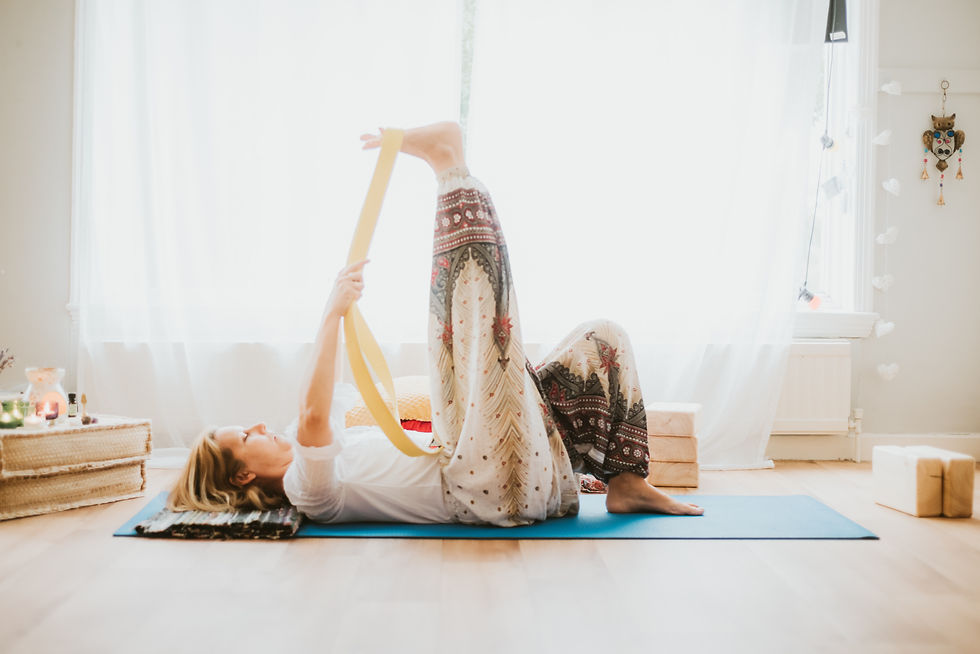
Keep your tools handy: Leave a yoga mat, a foam roller, or a stretching strap somewhere visible in your living room or office so you don't have to go digging through a closet to find them.
Try habit stacking: Pair your stretching with something you already do. Spend 10 minutes moving through a few gentle stretches while watching the evening news, waiting for your morning coffee to brew, or listening to a favorite podcast.
Keep it gentle: Focus on a mix of static stretches (holding a position) and dynamic mobility (like gentle arm circles, torso twists, or cat-cow flows) to keep things feeling fresh and relaxed.
Protecting Your Long-Term Autonomy
At the end of the day, prioritizing your flexibility is an investment in your future self. It’s the difference between an aging process that feels restrictive and one that feels full of life, energy, and freedom.
Whether your goals involve traveling, spending time in the garden, playing with family, or simply living free of nagging daily stiffness, staying mobile is what gets you there.
Flexibility isn't about being athletic, it's about protecting your independence so you can move safely, confidently, and comfortably for years to come.


Comments